EMERGENCY MEDICAL RESPONSE
O2 loss to the brain is fatal after 12 minutes. The average rural EMS response takes 14. We're changing that.
THE PROBLEM
Across America, millions live too far from life-saving emergency care. In rural communities, the difference between survival and tragedy is a clock no one can stop.
Median rural emergency response times exceed 14 minutes — double the life-saving threshold. For 10% of rural calls, delays approach 30 minutes.
For cardiac arrest, survival chances decrease 7-10% per minute without intervention. Every second truly counts.
Rural residents account for 60% of trauma-related deaths despite making up only 15-20% of the population.
Over 60 million Americans live in rural areas with limited or no access to advanced emergency medical services.
THE HUMAN COST
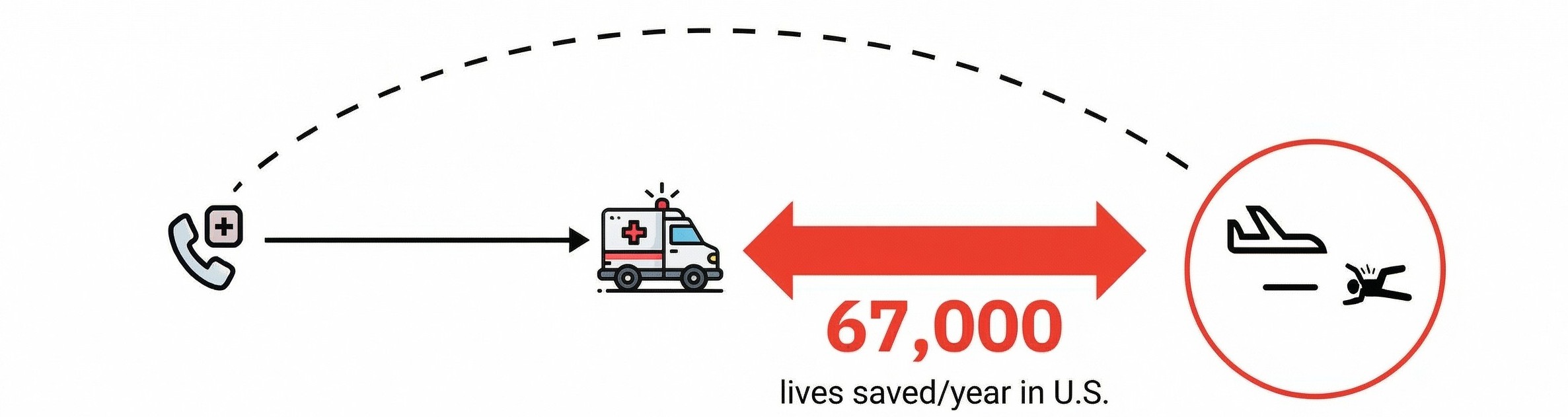
Preventable Deaths Every Year
It simply takes too long to get help in rural areas. For every condition — stroke, heart disease, respiratory failure, injury — rural residents die at dramatically higher rates than their metropolitan neighbors. Not because care doesn't exist. Because it arrives too late.
Source: National Rural Health Association Policy Brief: EMS Services in Rural America — Challenges and Opportunities, 2018
OUR MISSION
When someone you love has a medical emergency, you don't care how help arrives — you just need it now.
Jump Aero exists to bridge the deadly gap between the 911 call and the moment a paramedic reaches your side. We're building the fastest emergency medical response system ever created — purpose-built for the communities that need it most.
Our approach combines proven aerospace engineering with a single, unwavering goal: get there before the 12-minute threshold — when every second counts.
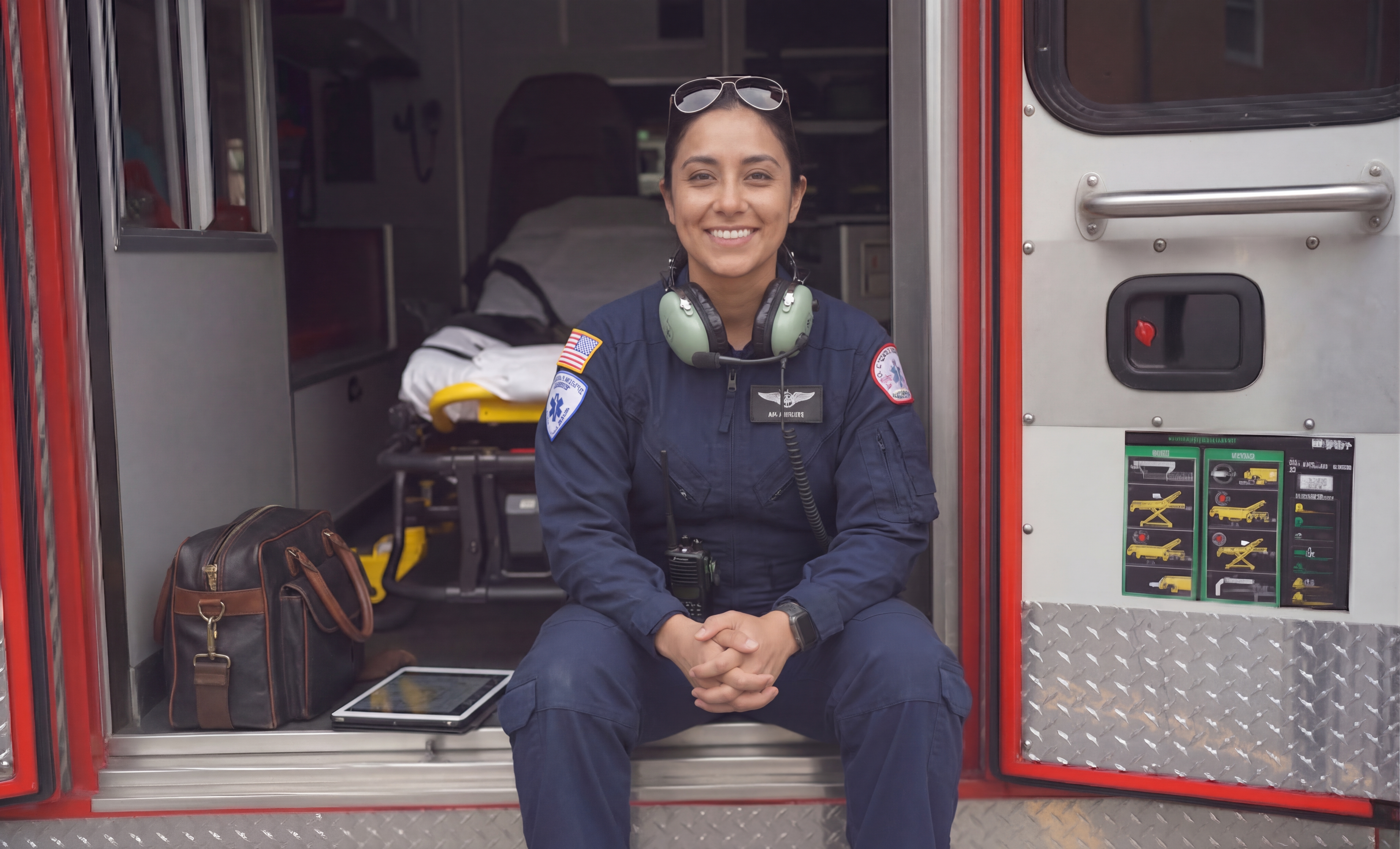
A trained EMT on-site in minutes — not a drone, a human decision-maker.
30-mile radius coverage in under 8 minutes from dispatch.
Dramatically quieter than helicopters — minimal community disruption during emergency response.
THE PROCESS
A radically faster way to get a trained paramedic to the people who need help most.
A 911 call is received. The system identifies an emergency suited for rapid aerial response — cardiac events, trauma, stroke, or situations where ground transport faces critical delays.
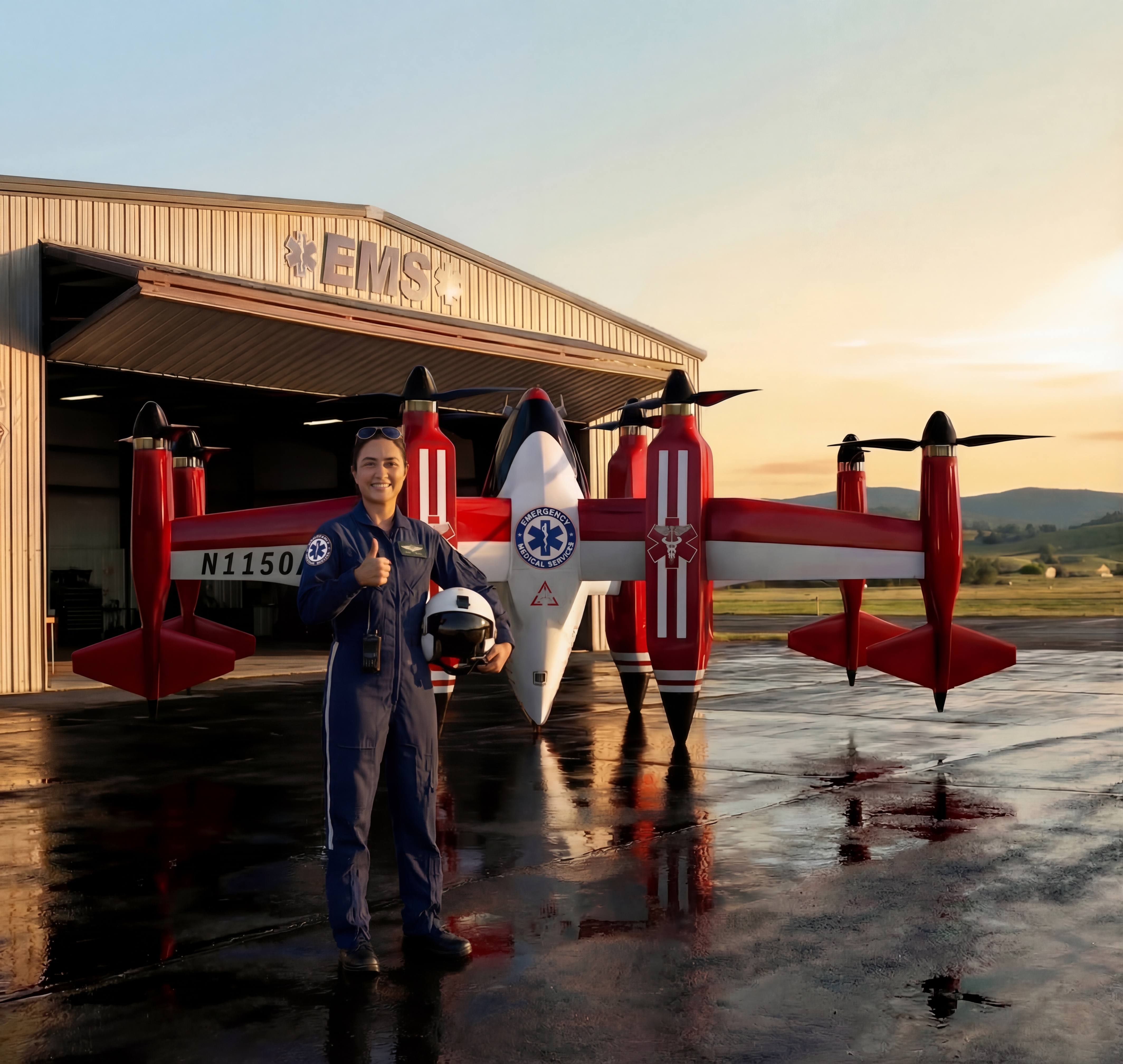
A pilot-paramedic receives the alert, boards the aircraft, and is airborne in under 60 seconds. Vertical takeoff means no runway needed — launch from a station pad, hospital roof, or prepared site.
The aircraft transitions to high-speed cruise at up to 288 mph — covering a 30-mile radius in under 8 minutes. No traffic, no road conditions, no detours. Direct line to the patient.
Vertical landing near the patient — driveways, fields, parking lots, hillsides up to 10° slopes. The paramedic begins advanced life support immediately, stabilizing the patient for ground ambulance transport.
THE DIFFERENCE
Cut rural emergency response from 14+ minutes to under 8 — bringing rural communities within the life-saving threshold for the first time.
Dramatically lower per-mission costs make continuous aerial EMS coverage viable for communities that could never afford traditional helicopter services.
Each station covers a 30-mile radius — providing rapid emergency response to communities across nearly 3,000 square miles from a single location.
BE PART OF THE SOLUTION
Live in a rural community? Help us bring rapid emergency response to your area. When you join, you tell us where the need is — and lock in the founding member rate before services launch.
Founding member rate — 10% of standard subscription
Your subscription tells us where the demand is. It's a vote for improving emergency medical response in your community.
Founding memberships are limited. Join now to lock in the 10% rate and help bring rapid EMS to your community.
GET IN TOUCH
Whether you represent an EMS agency, municipality, hospital system, or simply want to learn more — we'd love to hear from you.
POTENTIAL IMPACT